
Seton Villa celebrates 60 years of pioneering disability support
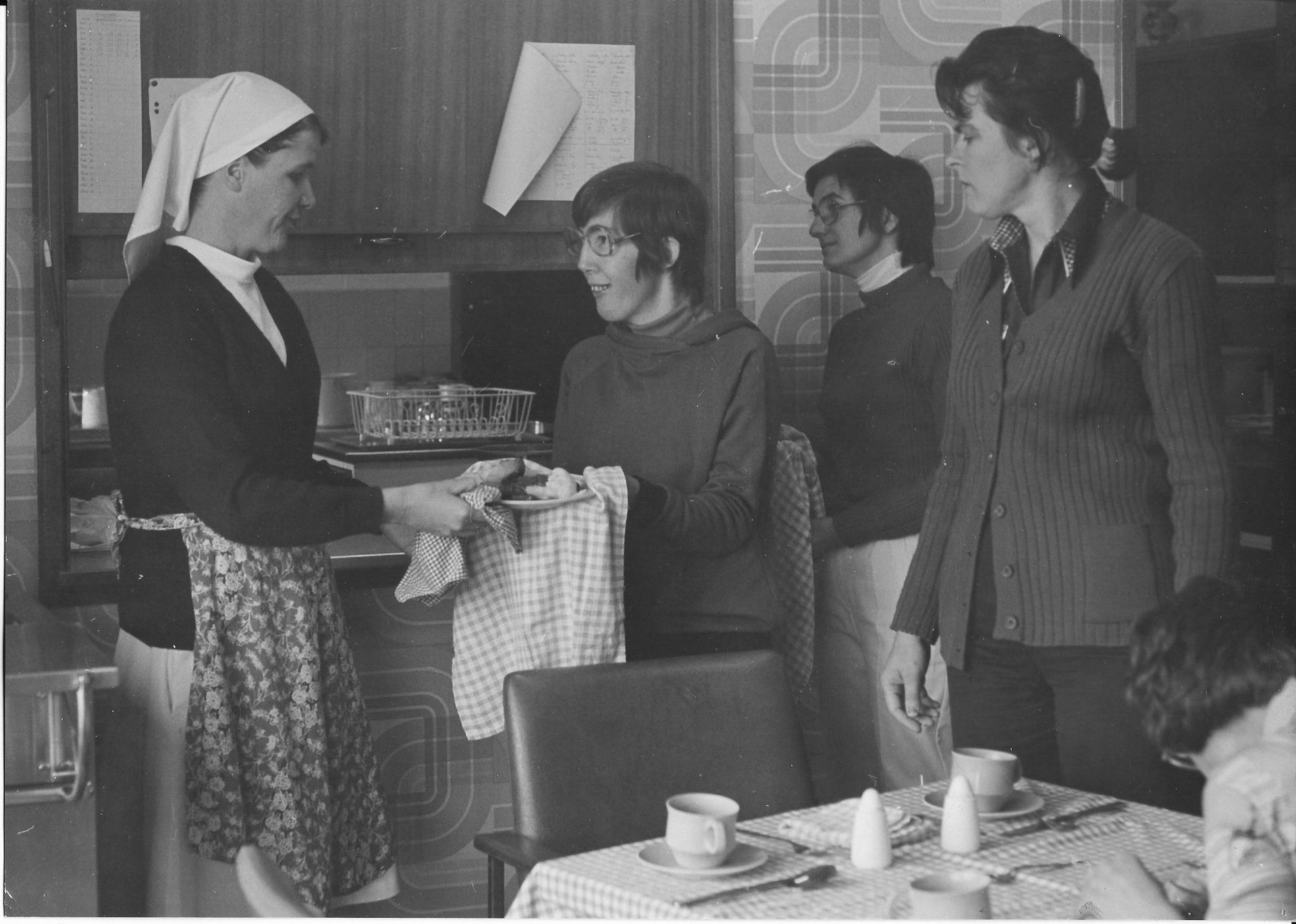
Seton Villa this week marked it's 60th anniversary and the enduring legacy of the Daughters of Charity of St Vincent de Paul, whose vision led to the organisation's founding. The milestone coincides with the Daughters' Centenary in Australia, in November 2026.
Seton Villa, founded in 1966 began as a pioneering initiative to provide a safe home and a better future for young women with intellectual disabilities. Today, that legacy of specialised disability support continues to thrive.
In the late 1950s, the Daughters of Charity recognised there were few suitable residential options for young women with intellectual disability beyond the family home or large institutions. They also saw the growing concern of ageing parents who worried about what would happen to their daughters when they could no longer provide care. Determined to create a better future, the Daughters spent years working with families, advocating for government support, and pursuing their vision of a purpose-built home. They wanted a place where residents would be treated with dignity, encouraged to develop independence, and supported to participate fully in community life.
After years of intensive planning, fundraising and advocacy, the Daughters secured NSW Government support to establish Seton Villa. The pioneering facility officially opened its doors in Eastwood, in Sydney’s north-west, on August 23, 1966, providing a purpose-built home for 24 young women.
“The Daughters of Charity were decades ahead of their time,” says Peter Gardiner, Seton Villa’s CEO. “Long before concepts such as person-centred care, community inclusion and independent living became standard government policy, the Daughters of Charity were already putting those principles into practice.
“What began as a pioneering home for 24 young women has evolved into a modern, choice-driven network of contemporary homes. The Daughters set an incredibly high standard for what disability support should look like, and that original spirit of innovation is what still drives us today.”
Capturing 60 years of history
To capture these rich stories and mark the dual milestones, Seton Villa has published a commemorative book titled Care, Empowerment and Choice: Celebrating 60 Years 1966-2026. The book features historic photographs, personal stories, and key milestones that have shaped the organisation over six decades.
The anniversary book celebrates the many families, staff members, volunteers, and benefactors who have helped shape Seton Villa over six decades. Among them is the Curran family, whose daughter Jenny made Seton Villa her home for more than 30 years.
From the earliest days, the Currans became deeply involved with Seton Villa, helping during the design of the original home, fundraising, leading the Parents and Friends Association and serving on the Board. Through the Bernard Curran Foundation, the family funded two Jenny Curran Activity Rooms and, more recently, Jenny’s Place – one of Seton Villa’s contemporary homes – ensuring Jenny’s legacy continues to enrich the lives of future generations of residents.
Reflecting on Jenny’s life, her brother Charles said: “We have many wonderful memories of Jenny at activities involving the Seton Villa families; woolshed dances, boat trips, picnics, dinners at restaurants and clubs, art shows, and bingo; the list goes on.”
Charles said Jenny’s presence enriched not only Seton Villa but also her own family. “In our family, the presence of somebody like Jenny is in fact a binding force. Across all the family, there was recognition of the need to and the wish to provide whatever care and support we could for Jenny… That was a blessing that came from having somebody like Jenny in our family.”
Seton Villa’s commitment to innovation didn’t end with the opening of the original residence. The commemorative history highlights how the organisation continually pushed boundaries, establishing milestones that paved the way for modern disability sector standards.
Over 60 years, Seton Villa has:
· Pioneered community living: In 1984, residents moved from the original group home into shared houses in the Marsfield community – a revolutionary step at the time that enabled people with intellectual disabilities to live more independently.
· Evolved its care model: Grown from one purpose-built residence into seven contemporary Specialist Disability Accommodation (SDA) homes.
· Empowered generations: Helped women with intellectual disabilities live with greater independence, dignity and choice.
· Stayed true to its roots: Maintained the deeply held Vincentian values originally established by the Daughters of Charity.
Building on the vision
The anniversary also celebrates another major modern milestone: the completion of a major redevelopment program that has transformed Seton Villa’s accommodation strategy. The initiative has delivered seven contemporary Specialist Disability Accommodation (SDA) homes tailored to residents’ individual needs. Crucially, the upgrade has enabled Seton Villa to expand its services to support men with intellectual disabilities for the first time in its history.
In the foreword to the anniversary book, Sister Debra McCarthy DC reflects on the organisation's willingness to continually adapt. “Change has been a constant over these years – change driven by the needs and dreams of residents and families. Change has also been driven by best practice, government policies and funding models and by research.”
Mr Gardiner says the updated housing model demonstrates Seton Villa’s ongoing commitment to innovation.
“Our homes have changed enormously over the past 60 years, but our purpose hasn't. We will continue to build on the vision of the Daughters of Charity by embracing creativity and innovation, ensuring every person receives the highest quality support and every opportunity to live a fulfilling life,” he says.
As Seton Villa celebrates 60 years of changing lives, it continues to build on the vision of the Daughters of Charity, ensuring people with intellectual disabilities can live with dignity, purpose, belonging and choice. The anniversary also provides an opportunity to recognise the Daughters’ century of service in Australia and the values that continue to guide the Seton Villa today.
About Seton Villa
Seton Villa was founded by the Daughters of Charity of St Vincent de Paul, and the first residence was opened on August 23, 1966. The original Seton Villa residence accommodated 24 ladies between the ages of 16 and 30 with the aim of encouraging and nurturing their development and potential. Residents were taught daily living skills, household chores, crafts and were encouraged to get involved in community, social and physical activities.
In May 1984, Seton Villa’s residents moved out of the original group residence into a series of shared homes throughout the local Marsfield community. This move was revolutionary for its time, empowering the ladies of Seton Villa to live in community while supporting their greater independence.
Today Seton Villa has seven residential houses to support the organisation’s Housing and Supported Independent Living services. Seton Villa is a small, tight community committed to creating a safe and dynamic lifestyle environment for the ladies that is aligned to the guiding care model of active support which means ‘working alongside’ rather than ‘doing for’. Seton Villa respects and nurtures the rights of people with disabilities to be active members of the broader community while pursuing their personal interests and goals.
share this
DAUGHTERS OF CHARITY NEWS
Related Articles